
What is UVC
UVC LEDs operating in the 250 nm to 280 nm wavelength range are rapidly emerging as the preferred technology for water, air and surface disinfection systems. However, for engineers familiar with conventional UV lamp design, navigating the differences between LED specifications and traditional lamp performance can be challenging.
Translating datasheet parameters into practical design requirements demands an entirely new methodology. Unlike conventional UV lamps, UVC LEDs are solid-state devices whose performance and characteristics vary significantly depending on drive conditions, thermal management, and operating environment.
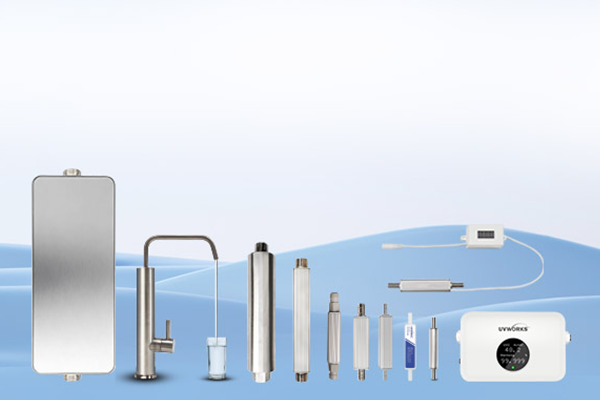
UV-C LEDs offer the same disinfection capabilities as traditional mercury lamps, while delivering a wide range of key advantages.
Unlike conventional UV lamps that contain mercury, which requires special handling and costly, safe disposal, UV-C LEDs are mercury-free and environmentally responsible.
UV-C LEDs feature a much smaller physical size than traditional mercury lamps, enabling seamless integration into compact, innovative, and space-constrained designs.
UV-C LEDs provide full output immediately upon activation, eliminating the warm-up period typically required for mercury-vapor lamps.
Frequent on/off cycling does not degrade LED lifespan, supporting unlimited switching cycles for enhanced operational flexibility.
UV-C LEDs separate heat generation from UV emission, allowing designs that minimize heat transfer—ideal for water treatment systems where temperature stability is critical.
A major advantage of UV-C LEDs is the ability to select specific, optimized wavelengths for maximum optical absorption and inactivation of target microorganisms.